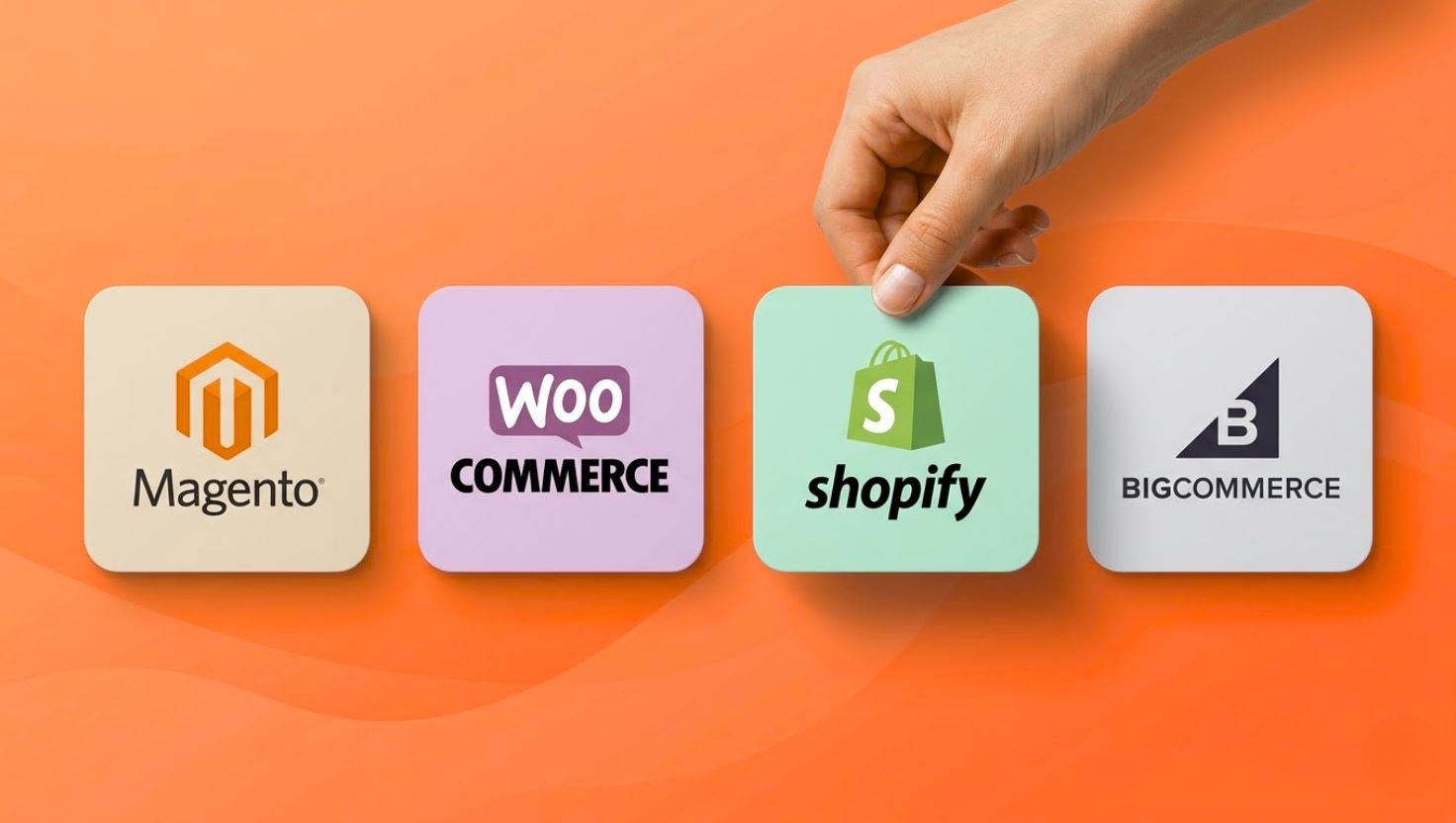
Choosing between Shopify and a custom-built online store is one of the most consequential decisions a business owner faces before launching. Pick the wrong path, and you could spend thousands on rework, lose customers to a clunky mobile experience, or find yourself migrating platforms just 12 months in. For businesses evaluating Shopify vs Custom E-commerce Development in Ryde, understanding the strengths, limitations, and long-term implications of each option is essential before committing to a platform.
This guide breaks down both options honestly, including where each falls short, so you can make an informed decision based on your store’s size, budget, and growth plans.
Quick Platform Decision Guide
Choosing the right platform does not have to be complicated. The table below provides a quick overview to help business owners understand which option is more suitable for their needs.
| If Your Business Needs | Recommended Platform |
| Launch an online store quickly with minimal setup | Shopify |
| Full control over SEO structure, design, and features | Custom E-commerce Development |
| Low upfront investment and easy management | Shopify |
| Advanced integrations and unique functionality | Custom Development |
| Long-term scalability for a growing brand | Custom Development |
For many small businesses, Shopify provides a fast entry into e-commerce. However, businesses planning significant growth or unique functionality often benefit from a custom-built platform.
Shopify and Custom Development: The Core Difference
Shopify is a hosted e-commerce platform. You pay a monthly subscription, choose a theme, add your products, and you are live. It is genuinely fast to set up and handles hosting, security, and software updates for you. For a business that needs a clean, functional online store without complex requirements, it works well.
Custom e-commerce development means building a store from the ground up, or on top of an open platform like WordPress WooCommerce, tailored to your specific workflow, brand, and customer journey. It takes longer and costs more upfront, but you own the codebase, control every feature, and avoid recurring platform fees.
Neither option is universally better. The right choice depends on where your business is now and where it needs to go.
Side-by-Side Comparison
The table below reflects real trade-offs, not a sales pitch for either direction.
| Feature | Shopify | Custom Development |
| Setup Time | Days to weeks (fast entry) | Weeks to months (structured build) |
| Design Flexibility | Template-based; some customisation via apps | Fully bespoke to your brand |
| Scalability | Good for small-to-mid stores; platform limits at scale | Unlimited, built around your roadmap |
| SEO Control | Moderate; some limitations on URL structure and meta | Full control over structure, schema, and speed |
| Ongoing Costs | Monthly subscription (from ~$39/month) + apps | Hosting only (~$20/month) |
| Maintenance | Managed by Shopify; updates are automatic | Requires a developer for updates; more control |
| Best For | Quick-start stores with standard product catalogues | Complex workflows, unique features, and scaling brands |
A note on cost: Shopify’s monthly subscription starts at around $39/month, but can climb significantly once you factor in the apps most stores need, email marketing, advanced analytics, loyalty programs, and so on. Custom builds have a higher upfront investment but typically lower ongoing costs. Factor in a 12-month total cost of ownership when comparing.
Pros and Cons Summary
Below is a simplified overview of the advantages and limitations of both approaches.
Shopify Advantages
- Fast setup and launch
- Managed hosting and security
- Large ecosystem of apps and integrations
- Beginner-friendly dashboard
Shopify Limitations
- Monthly platform subscription fees
- Limited checkout customisation
- Dependence on third-party apps for advanced features
Custom Development Advantages
- Complete control over design and functionality
- Greater flexibility for SEO and integrations
- Scalable architecture tailored to business growth
Custom Development Limitations
- Higher initial development cost
- Longer development timeline
- Requires ongoing technical maintenance
Understanding these trade-offs helps businesses choose the platform that aligns with their long-term goals.
Which Businesses Should Use Shopify?
Shopify is designed to make launching an online store simple and accessible. It works particularly well for businesses that need a reliable e-commerce solution without complex development requirements.
Shopify is typically a strong choice if:
- You are launching your first online store and want a quick setup.
- Your product catalogue is small to medium-sized.
- You want a hosted platform that manages security, updates, and hosting.
- Your store uses standard checkout and product functionality.
- You prefer an easy-to-manage dashboard without technical maintenance.
For businesses that need a fast, stable online store with minimal setup, Shopify provides an efficient solution.
When Custom Development Is the Better Choice
Custom e-commerce development is ideal when a business requires flexibility, advanced functionality, or full control over how the online store operates.
A custom-built e-commerce website is usually the better option if:
- Your store requires unique checkout functionality or pricing logic.
- You need advanced integrations with internal systems such as ERP or inventory management.
- SEO is a primary traffic source and requires full control over URLs, schema, and site structure.
- You want complete control over design, branding, and user experience.
- Your business plans to scale significantly over the next few years.
While custom development requires a higher initial investment, it provides long-term flexibility and eliminates many of the platform limitations found in hosted solutions.
E-commerce Website Planning Checklist
Before choosing an e-commerce platform, it is important to evaluate your business requirements. Answering the following questions can help clarify which development approach is best.
Consider the following factors:
- How many products will your store sell?
- Will you need inventory or accounting system integrations?
- Do you expect your product catalogue to grow rapidly?
- Will search engine optimization (SEO) be a key marketing channel?
- Do you require custom checkout functionality or payment logic?
- What is your expected timeline for launching the store?
- What budget have you allocated for development and ongoing maintenance?
By planning these details early, businesses can avoid costly platform migrations or redesigns later.
Common Problems Ryde Businesses Run Into
1. Hitting Platform Limits as You Grow
Shopify is built for the masses, not for any specific workflow. Many business owners start with Shopify because it is quick, then find 12–18 months later that they need checkout logic Shopify cannot support, SEO control they cannot access, or integrations with internal systems that require custom API work.
By that point, a platform migration becomes necessary, which often costs as much as building correctly from the start. The solution is scoping your needs honestly before you build. If your requirements are straightforward now and likely to stay that way, Shopify may be the right call. If you have a specific workflow in mind or plan to grow quickly, a custom build may be cheaper in the long run.
2. A Poor Mobile Experience That Kills Sales
Over 60% of e-commerce traffic in Australia comes from mobile devices. Yet many businesses launch stores that look fine on a laptop but break on a phone, navigation that does not collapse properly, images that overflow the screen, and checkout flows that are frustrating on a small keyboard.
This happens when developers use outdated frameworks or rely on default Shopify templates without mobile-first testing. A properly built store uses a mobile-first design approach, tests across multiple devices and screen sizes before launch, and uses modern frameworks to ensure fast, interactive experiences on any connection speed.
3. Launching With No SEO Foundation
An online store with no search visibility is like a shopfront with no signage. Shopify’s default structure imposes some limitations on URL flexibility, meta control, and page speed, all factors Google uses to rank pages. Businesses targeting local Ryde or Sydney searches often find their store buried on page four despite having excellent products.
Custom development gives full control over clean URL structures, schema markup, load speed, and local SEO signals. These are not afterthoughts; they should be built in from the beginning.
Common E-commerce Mistakes Businesses Make
Launching an online store is a major step for any business, but several common mistakes can limit long-term success.
1. Choosing a Platform Based Only on Price
Many businesses select the cheapest option without considering scalability or long-term functionality.
2. Ignoring Mobile Optimisation
More than half of online shoppers browse from mobile devices. A store that performs poorly on smartphones can lose a significant number of potential customers.
3. Launching Without SEO Structure
Without proper URL structures, metadata, and schema markup, an e-commerce store may struggle to appear in search results.
4. Relying on Too Many Plugins or Apps
Adding excessive apps can slow down the website and increase monthly operating costs.
5. Not Planning for Future Growth
A store built only for current requirements may require expensive redevelopment once the business grows.
Avoiding these mistakes can significantly improve the long-term performance of an online store.
E-commerce Development Workflow
A structured development process ensures that an online store is built efficiently, securely, and with long-term performance in mind.
1. Discovery and Strategy
The process begins with understanding the business goals, target audience, and product structure.
2. UX and UI Design
Wireframes and visual mockups are created to design the customer journey and ensure a smooth shopping experience.
3. Development
Developers build the website using the chosen platform and integrate core functionality such as product pages and checkout systems.
4. System Integrations
Payment gateways, shipping providers, inventory systems, and analytics tools are connected.
5. Testing and Optimisation
The website is tested across devices and browsers to ensure performance, speed, and usability.
6. Launch and Ongoing Support
Once testing is complete, the store goes live and ongoing maintenance ensures the site continues performing optimally.
Why Choose Our E-commerce Website Development Services in Ryde
Web Mobile Solutions has delivered e-commerce website development services in Ryde and across Sydney since 2014. We are not a generic agency. We are a team of dedicated developers who specialise in building online stores that perform. Here is what working with us looks like.
Our Web Development Process
- Discovery: We gather your requirements, define goals, and map your target audience.
- Design: We create wireframes and UI mockups tailored to your brand and customer journey.
- Development: We build your store using the right platform, WordPress, WooCommerce, Shopify, or fully custom with clean, tested code.
- Integration: We connect payment gateways, inventory systems, shipping APIs, and analytics tools.
- Launch & Support: We test across all devices, launch your store, and provide ongoing maintenance and hosting.
About Web Mobile Solutions
Web Mobile Solutions has been building websites and online stores in Sydney since 2014. With over 300 completed projects across retail, hospitality, trade services, and disability support, the team brings hands-on experience with the real problems local businesses face online.
The agency works with WordPress WooCommerce, Shopify, and fully custom-built solutions using PHP, Node.js, and React.js. Every project is scoped individually, and the team’s stated values, People, Progress, Integrity, and Customers, reflect an approach that is focused on long-term results rather than quick wins.
Web Mobile Solutions also has an existing partnership with REPTRI, an Australian AI receptionist service. This means businesses that want to explore AI-powered customer engagement as part of their e-commerce setup can discuss that integration as part of the same project.
Local clients include gift platform OZ MOOD, trade services businesses like Masterful Painter and Meritondoors, and others across the Ryde and broader Sydney area.
Frequently asked questions
What does e-commerce website development actually involve?
It covers the full process of designing, building, and launching an online store — including platform selection, payment integration, mobile optimisation, and SEO setup.
Is Shopify or custom development better for my business?
Shopify suits small stores needing a fast, low-cost launch. Custom development is better if you need unique features, full SEO control, or plan to scale significantly. A short consultation usually makes the right answer clear.
How much does e-commerce development cost in Ryde?
Hosting starts at $20/month, and domain registration costs $25/year. Custom builds are scoped to your specific requirements. Contact Web Mobile Solutions for a no-obligation quote.
How long does a custom build take?
Typically, 4–8 weeks for a standard custom store, depending on features and content readiness. Shopify setups can go live in days. A clear timeline is provided at the start of every project.
Is SEO included?
Foundations — URL structure, meta tags, schema, and speed optimisation — are built into every project. Standalone SEO bundles are also available, with a 20% discount when combined with hosting.
Can you migrate my existing Shopify store?
Yes. Full platform migrations are handled, including product data, customer records, and SEO redirects, ensuring no loss of Google rankings during the transition.
Will my store work on mobile?
Every store is built fully responsive and mobile-tested before launch. With over 60% of Australian e-commerce traffic on mobile, this is non-negotiable.
What support is available after launch?
Ongoing maintenance contracts and full hosting support are available. The $20/month hosting plan includes SSL, malware protection, backups, and dedicated support access.
Choosing the Right Platform
The best e-commerce platform is the one that aligns with your business goals, budget, and growth plans.
Businesses that need a quick launch with standard functionality often benefit from platforms like Shopify. It offers a simple setup and managed infrastructure that allows businesses to focus on selling products rather than managing technology.
However, companies planning to build a scalable brand with advanced functionality and full SEO control often find that custom e-commerce development provides greater long-term value.
The key is understanding your current requirements while planning for future growth. Evaluating both options carefully ensures that your e-commerce platform supports your business for years to come.
Contact us today:
Phone: +61 422 760 153
AI Receptionist: 0489 26 00 26
Email: info@webmobilesolutions.com.au